

Life pulsates in football stadiums. It is therefore all the more important that a stadium’s power supply is secure so that fans and officials have an unforgettable experience – and that it is as sustainable and climate-friendly as possible.
To achieve this, RWE and Borussia Dortmund (BVB) agreed a six-year partnership in the summer of 2024 – RWE has since been the renowned soccer club's “Premium & Sustainability Partner” and supports BVB in its ambitious decarbonization plans.
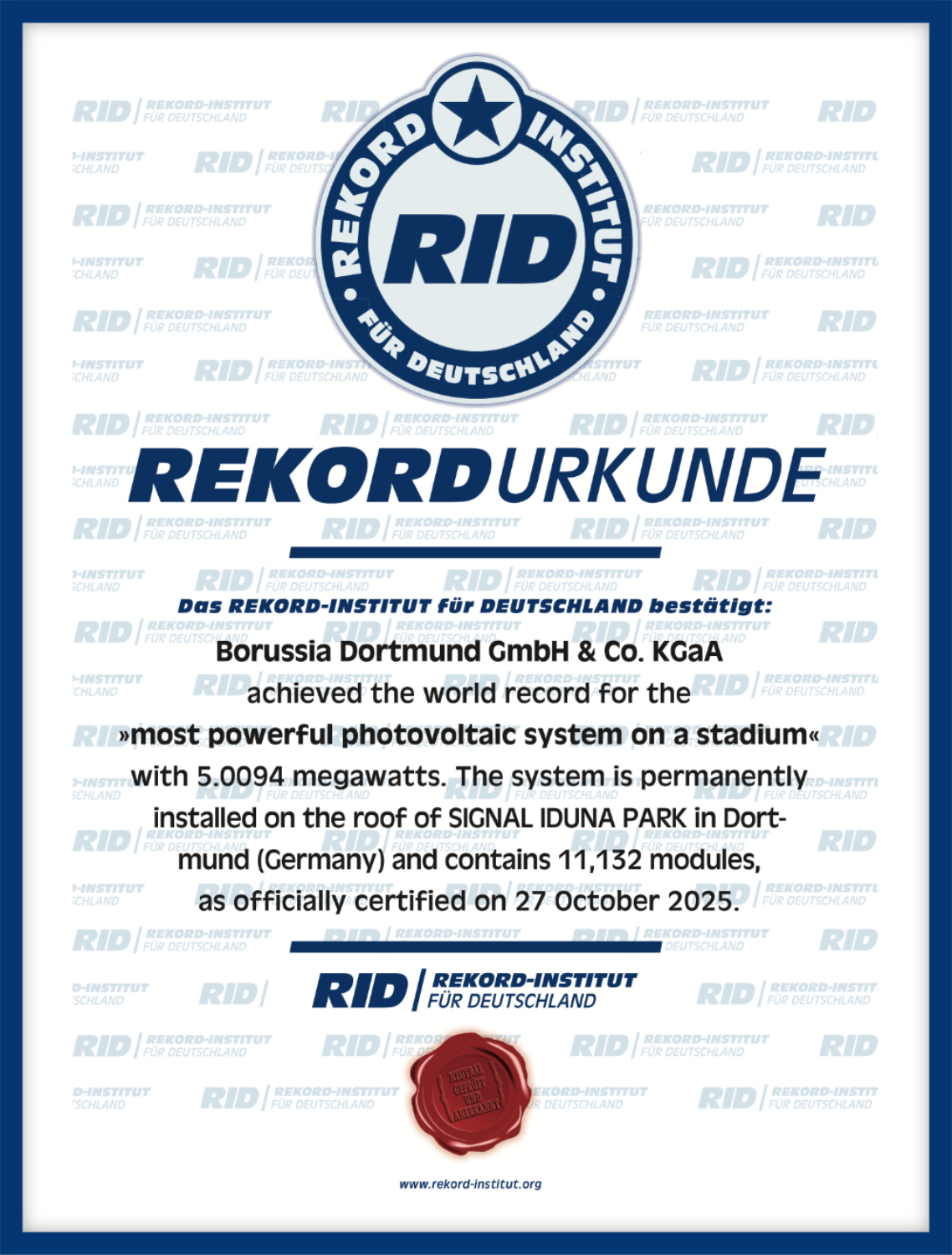
As part of the joint project, the photovoltaic system on the roof of Borussia Dortmund’s SIGNAL IDUNA PARK stadium was modernised and expanded: with 11,132 solar modules and an output of over 5 megawatts (MWp), the world's most powerful photovoltaic system on a stadium roof was completed. The world record set by this system has been officially confirmed by the German Record Institute.

Battery storage complements PV systems
The new photovoltaic system can generate four times more electricity from renewable energy than the previous system – in the future, BVB will cover up to half of its electricity requirements for the stadium with solar power.
To ensure a sustainable power supply even on days with little sunshine, an additional battery storage system will be connected to the plant. This battery storage system with a capacity of 3.7 megawatt hours will be completed by early 2026.
Further energy projects are planned as part of this partnership. A new PV system with around 200 solar modules was already installed on the roof of the BVB Fan World next to the stadium in April 2024.
Commissioned
Solar modules on stadium roof
Solar modules on BVB Fan World roof
Total solar power BVB stadium
(3.36 MWac)
Installed power BVB Fan World
Battery storage capacity

“We are proud to have set a new record with BVB, one of Germany's most internationally renowned football clubs. Together, we have installed the world's most powerful solar system on the roof of Germany's largest stadium. This is a powerful statement in favour of efficient climate protection, and is the result of the work of two teams that are perfectly aligned in their commitment to sustainability.”
Further information can be found behind the clickable buttons.
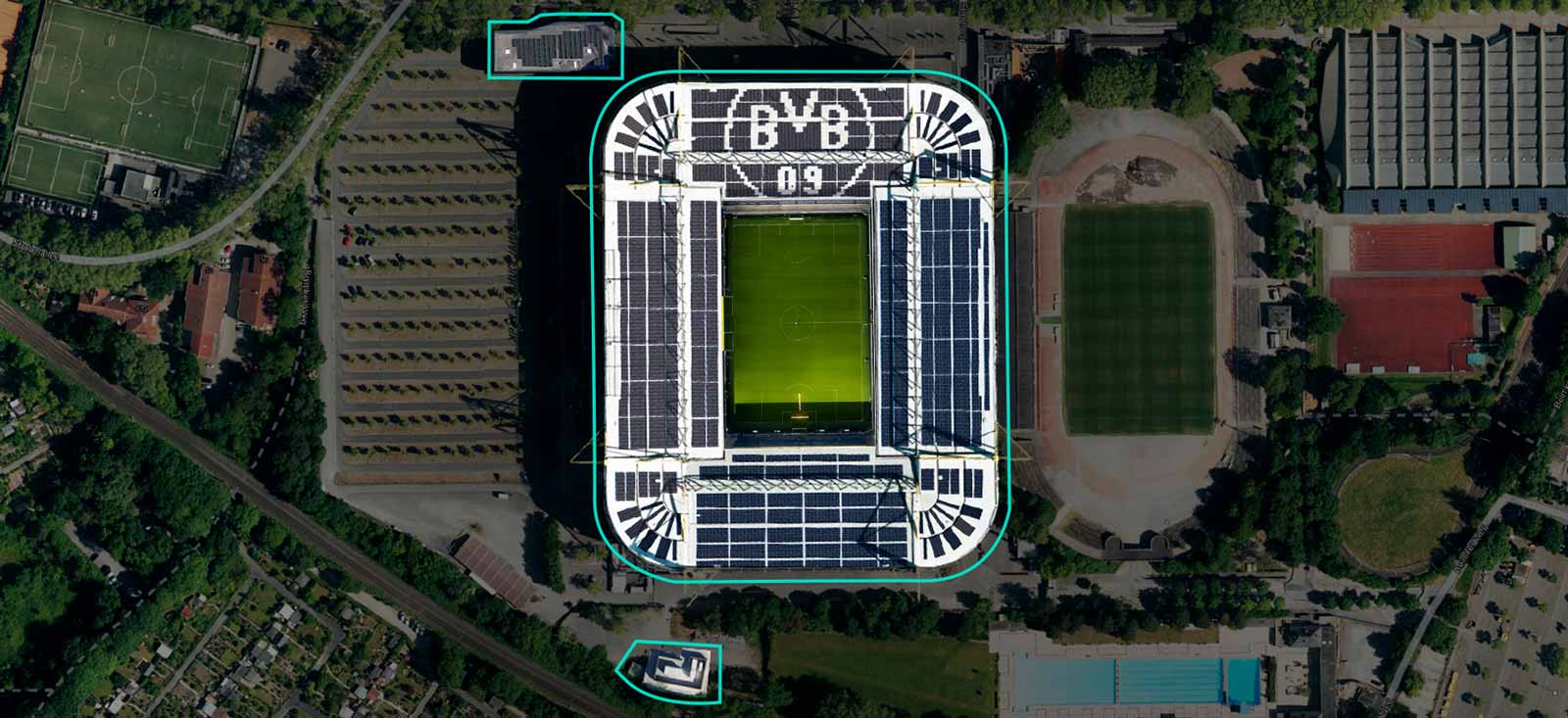
Installed capacity: 99 kWp
Installed modules: 226
Commissioning: April 2024
Installed capacity: 5 MWp
Installed modules: > 9,500
Planned commissioning: 2025
Installed capacity: 3.7 MWh
Planned commissioning: 2025