




Frequency Containment Reserve (FCR) is an ancillary service used by transmission system operators (TSOs) to maintain the electricity grid frequency at 50 hertz.
FCR is fully activated within 30 seconds by means of a local grid-frequency controller and must be provided by the Technical Unit for a duration of 15 minutes.
The output provided by the Technical Unit is increased or reduced in proportion to the measured grid frequency. The control range lies within a frequency band of 49.8 Hz to 50.2 Hz. However, the Technical Unit is only requested to provide power once the frequency reaches 49.99 Hz or 50.01 Hz, i.e. outside the deadband.
The TSOs tender their FCR requirements on the joint online platform www.regelleistung.net. According to the platform, a product time slice for capacity provision covers four hours. The capacity provided for a product time slice corresponds to a symmetrical band comprising both positive and negative reserve capacity.
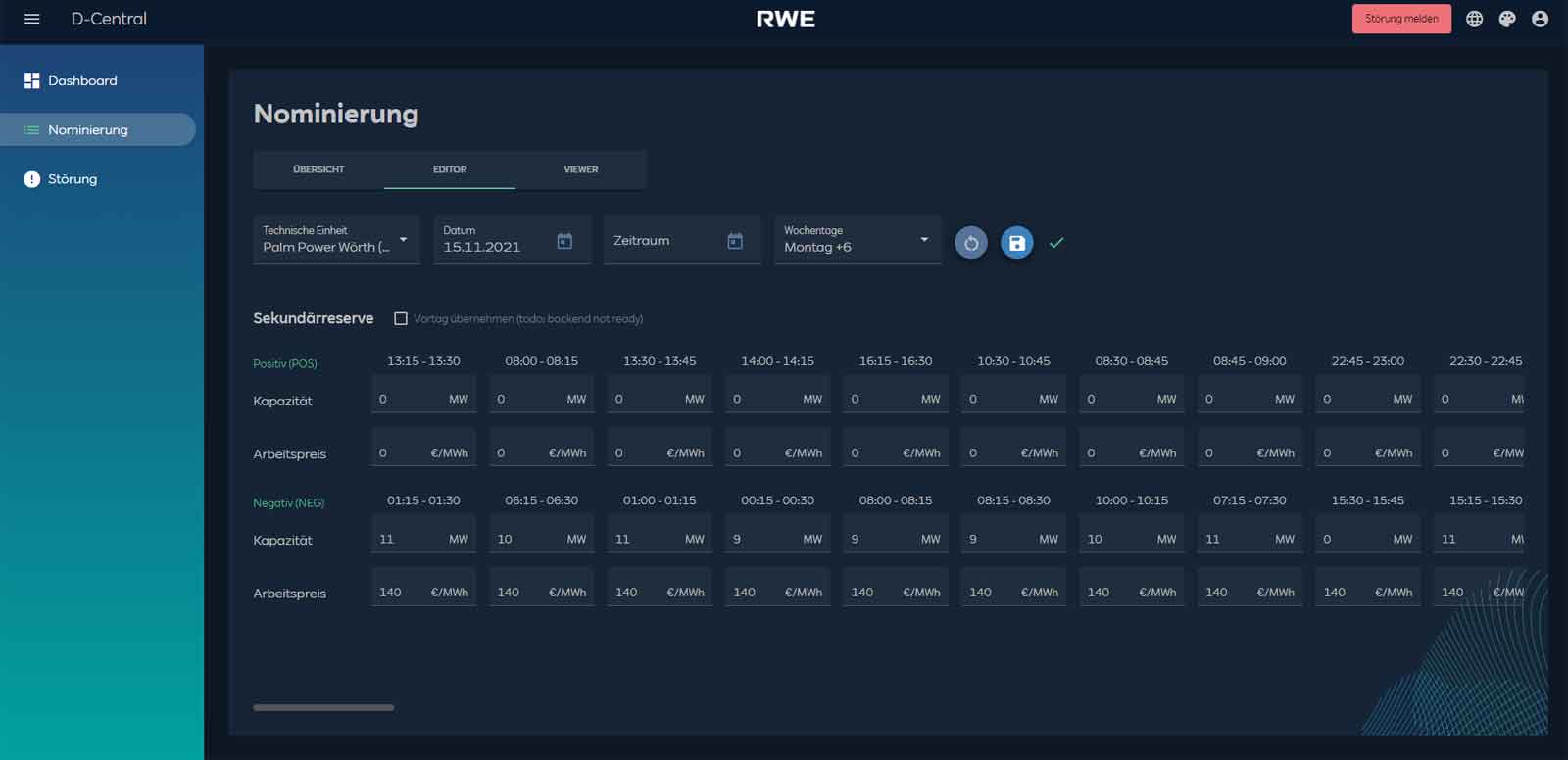
The availability of your Technical Unit, or the capacity to be submitted as part of the bid nomination, is transmitted to RWEST via the D-Central web interface.
Capacity provision is remunerated and settled using marginal pricing. This means that all successful bids are remunerated by the TSO at the price of the final accepted bid.
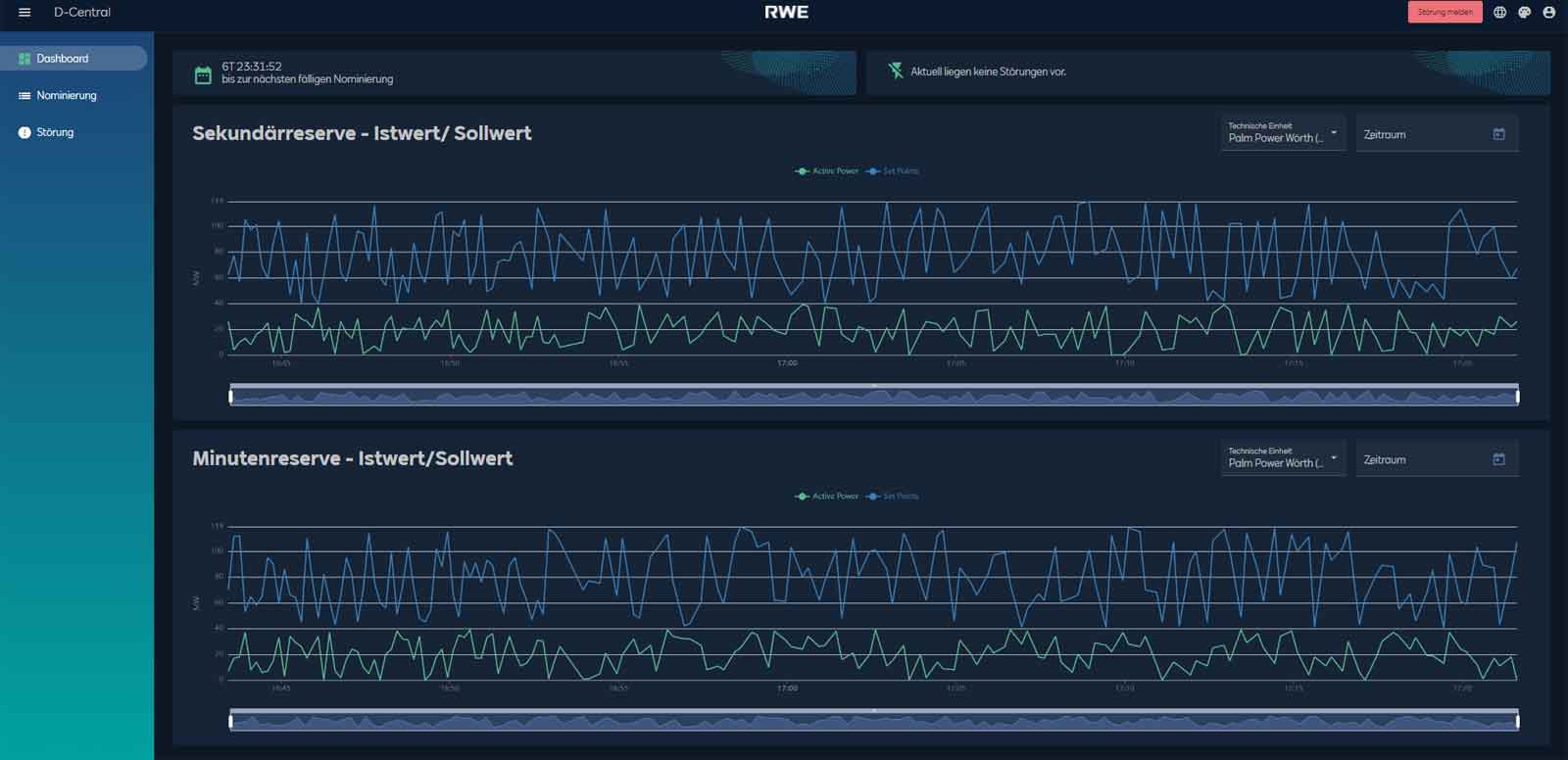
The prequalification process verifies that the technical characteristics of your Technical Unit meet the TSO requirements. For this purpose, we conduct a prequalification run in the form of a triple-hump test. Setpoints and actual values, operating point and frequency—as well as the state of charge for batteries—are recorded as a load-profile log and submitted to the TSO as evidence.
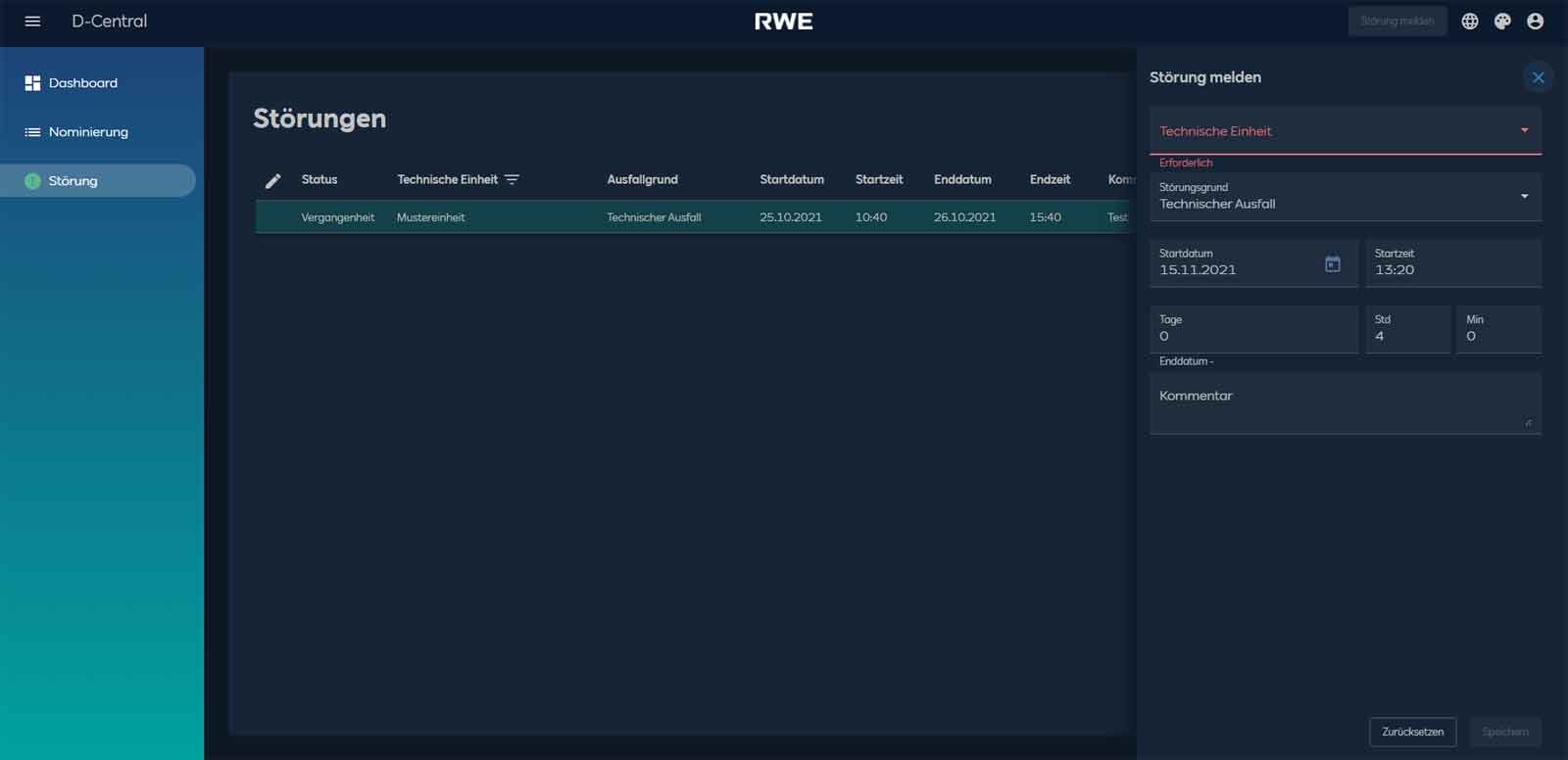
Data is transmitted via a control-system connection between your Technical Unit and the RWEST process control system or pool. Backup coverage for your Technical Unit in the event of technical outages is provided by the RWEST pool.


 +49 201 5179 1999